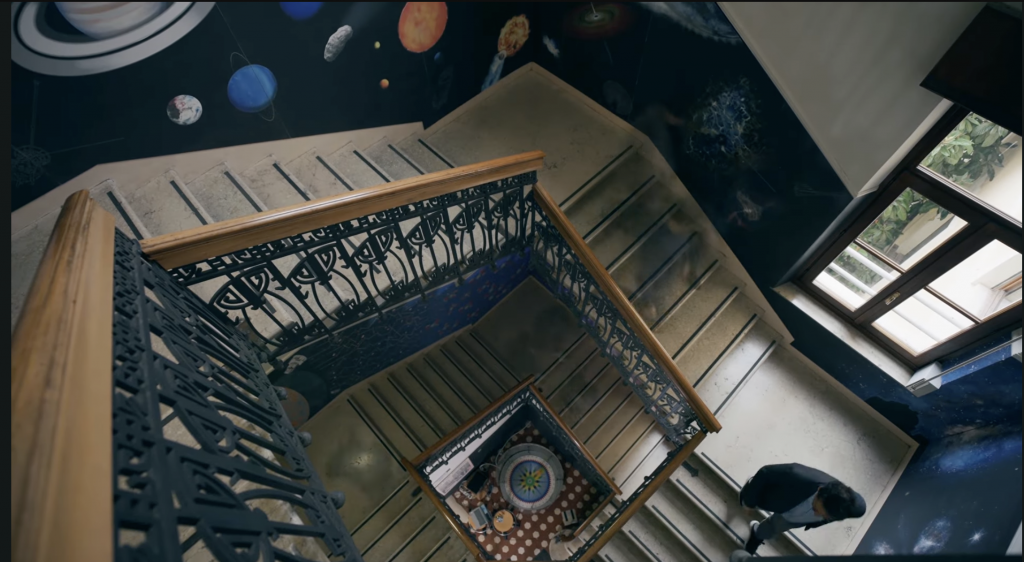
Quantum Information and Matter group video
Want to learn more about the research of the Quantum Information and Matter Group at the University of Padova? Watch this short video to discover what we do.
Want to learn more about the research of the Quantum Information and Matter Group at the University of Padova? Watch this short video to discover what we do.
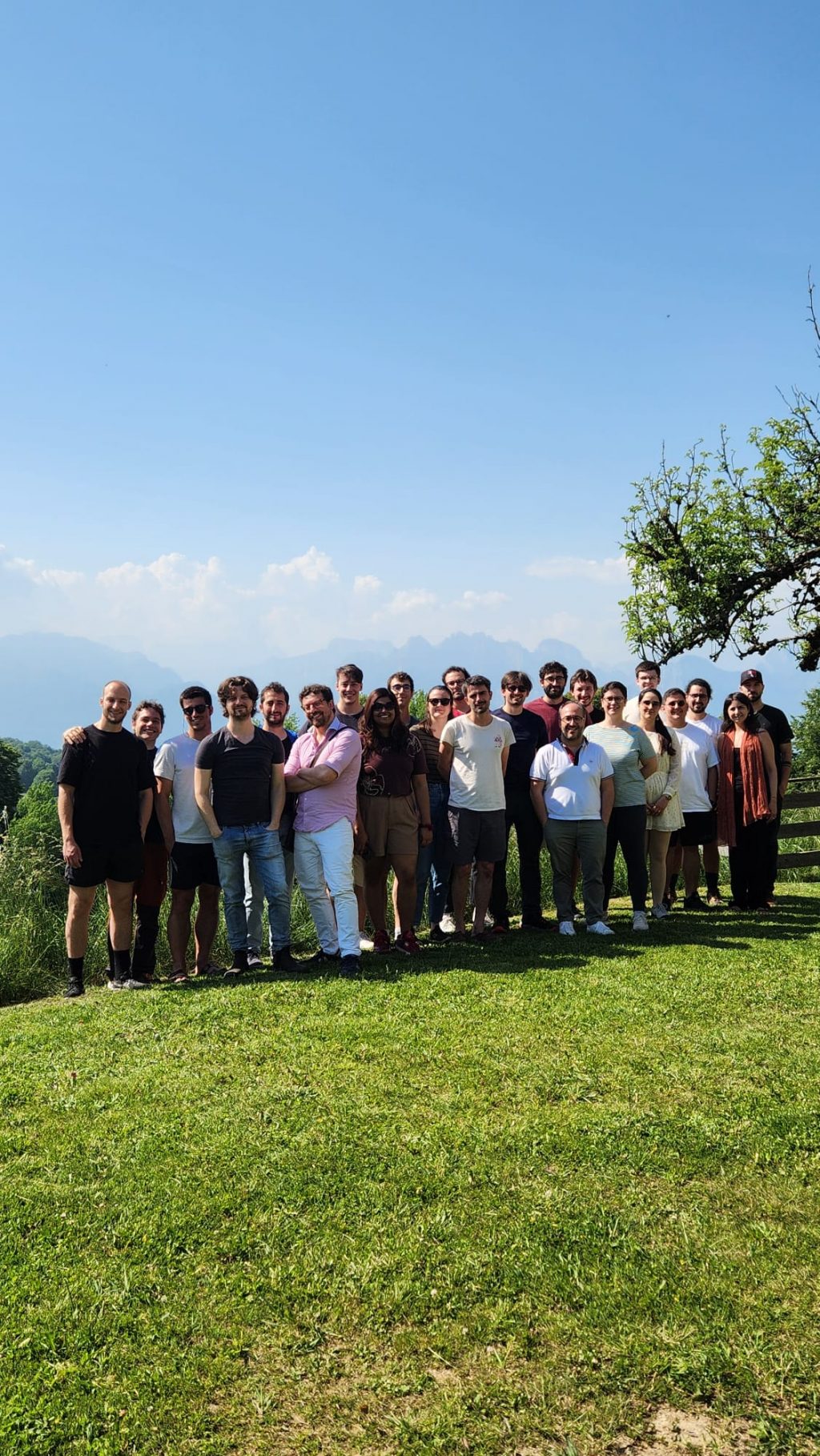
The Quantum Group Retreat 2026 took place from 25–27 May at Rifugio Pranolz, set against the stunning backdrop of the Dolomiti Bellunesi. It was a wonderful few days of team building, engaging discussions on physics, and enjoying the beauty of the surrounding mountains together!

We are thrilled to announce we have presented a poster about QMatchaTea at the MQSF conference, an incredibly engaging event filled with fascinating presentations on cutting-edge quantum software and tools! The poster, created in collaboration with ParTec AG and CINECA, highlights key insights from our benchmarking results and showcases QMatchaTea’s potential within the quantum research community. You can find all the details in the poster!
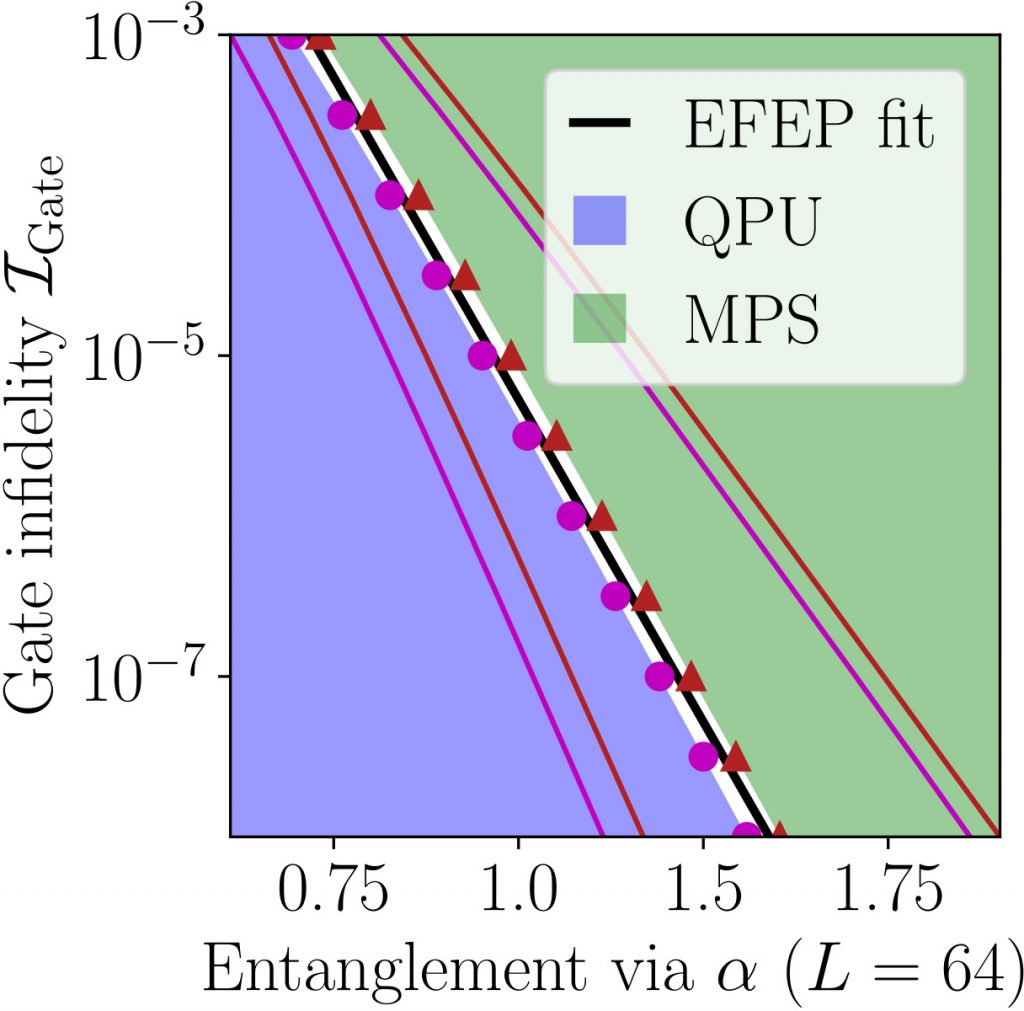
Open Science: our 2023 publication on the green quantum advantage has been selected by IOP Publishing to highlight success stories of the transformative agreement allowing us to easily publish open-access. Open-access publications are one pillar of open science next to open-source software like our Quantum TEA software or open-data repositories.
Overview The second quantum computing workshop @ INFN will be held in Padova on 29-31 October 2024. Quantum computing potentially offers a paradigm shift for issues of interest to INFN, in areas ranging from quantum machine learning to event reconstruction and simulation for experiments, theoretical physics, and many others. The Quantum Computing @INFN workshop represents an opportunity for the community to come together and receive training, with the objectives of presenting ongoing activities, fostering the exchange of knowledge and experiences, and attracting researchers and technologists who wish to acquire or enhance their skills. We invite you to visit the official event page for more information.
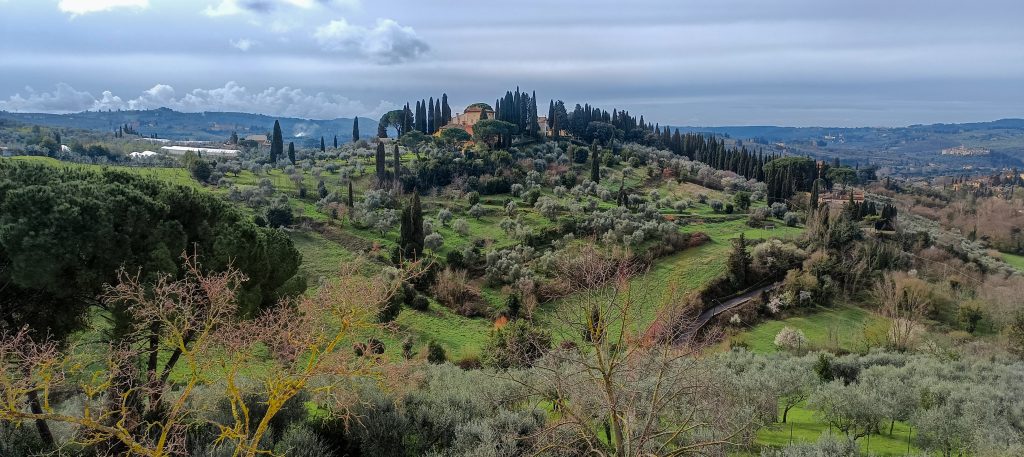
Dr. Francesco Campaioli visited Dr. Stefano Gherardini at LENS and CNR in Arcetri, Florence, to study quantum mechanical effects in exciton dynamics. The research visit was held at the CNR-INO headquarters, which are historically famous for having hosted Galielo, Enrico Fermi, and Margherita Hack.
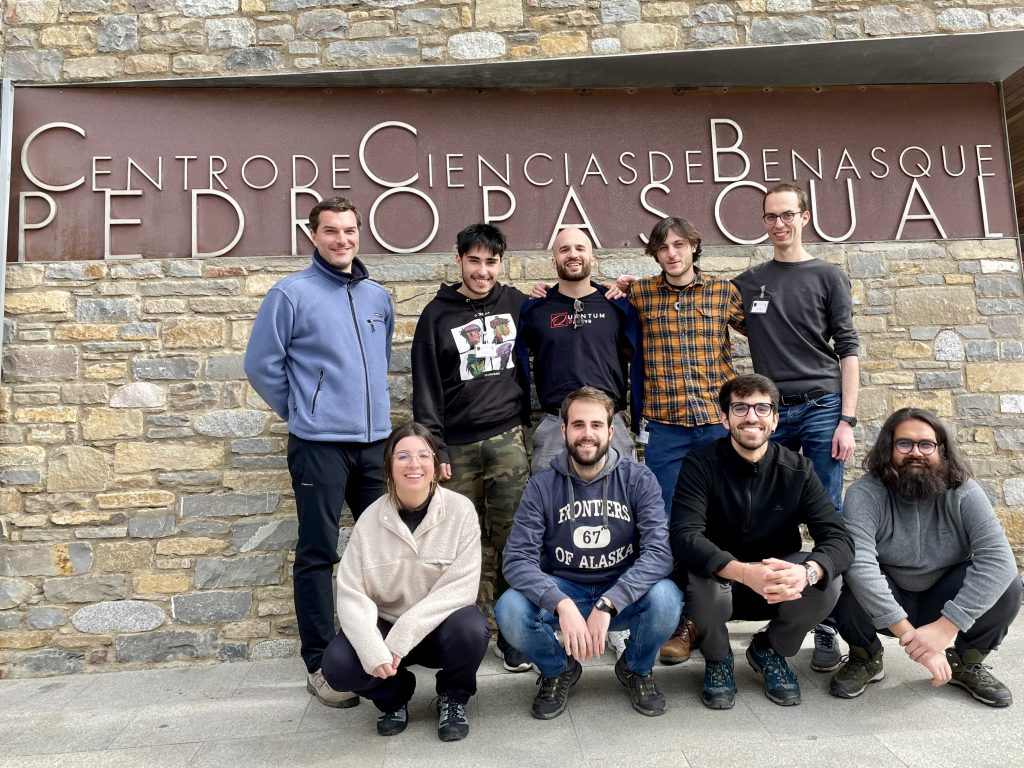
Giovanni Cataldi recently attended the Group Retreat “Quantum Matter Simulation” organized by Prof. Enrique Rico at the “Centro de Ciencias de Benasque Pedro Pascual”. The retreat provided an opportunity for industrial companies and Universities to collaborate and discuss promising applications of Quantum Technologies. During the retreat, he presented his recent results on Tensor Network Methods for non-abelian Lattice Gauge Theories in High-Energy Physics. In the picture, Giovanni and the research group of the University of Basque Country, where he spent a research period last year.
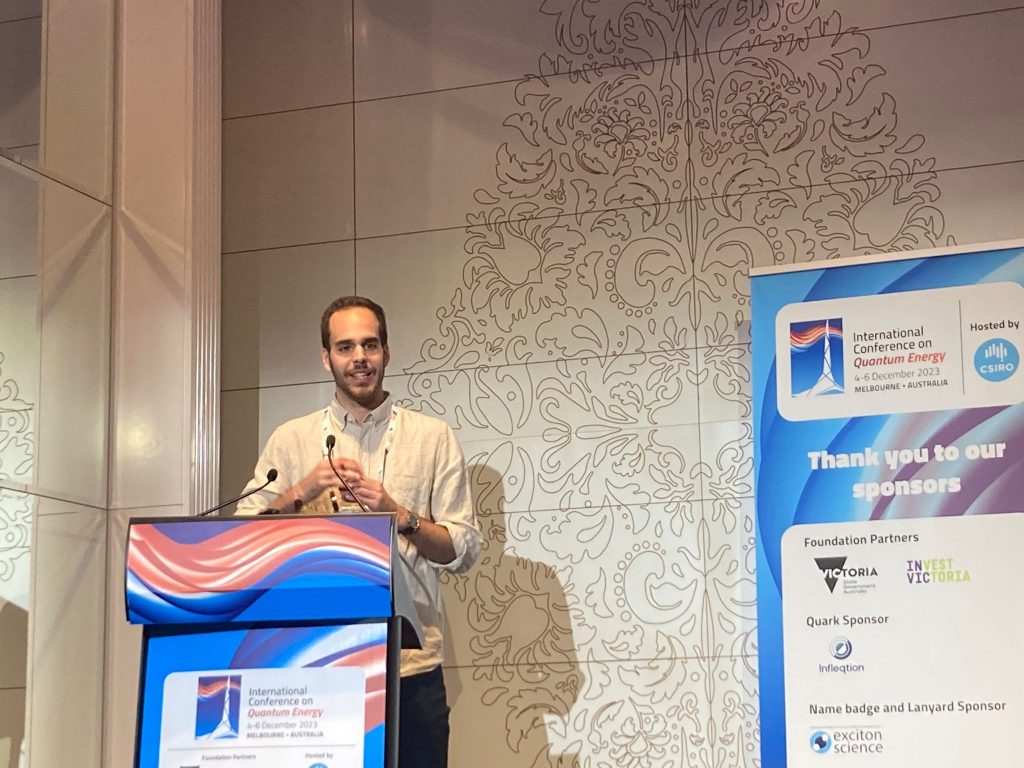
Presented by Australia’s national science agency, CSIRO, the International Conference on Quantum Energy (ICQE) had its inaugural edition in Melbourne, Australia. The event explored the role of quantum mechanics in energy-related challenges, ranging from the energetic cost of computation to power conversion efficiency of photovoltaics technology. ICQE 2023 brought together experts from around the world, covering energy related topics across fundamental and applied disciplines, such as material science, light-harvesting, photochemistry, quantum information, quantum thermodynamics, and quantum chemistry. The event saw the participation of Australia’s Chief Scientist, and renowned physicist, Dr Cathy Foley AO PSM, who delivered the opening keynote address. Other esteemed keynote speakers included Prof Gerard Milburn, Prof Alexia Auffèves and Prof Sir Peter Knight, who shared their ground-breaking work and latest insights. Prof Auffèves gave an update on the Quantum Energy Initiative and the QEI workshop 2023 that was held in Singapore in November. MSCA Fellow Dr Francesco Campaioli gave an invited talk on the progress of energy storage in quantum systems, based on the colloquium article on quantum batteries authored with Dr G. M. Andolina, Prof M. Polini, Dr J. Quach, and Dr S. Gherardini, recently released on the arXiv. Francesco was nominated co-chair for the next edition of ICQE, together with Prof Alexia Auffèves (Research Director at CNRS, Director of MajuLab in Singapore, Head of Quantum Energy Team), with the aim to bring the event to Europe in 2025.
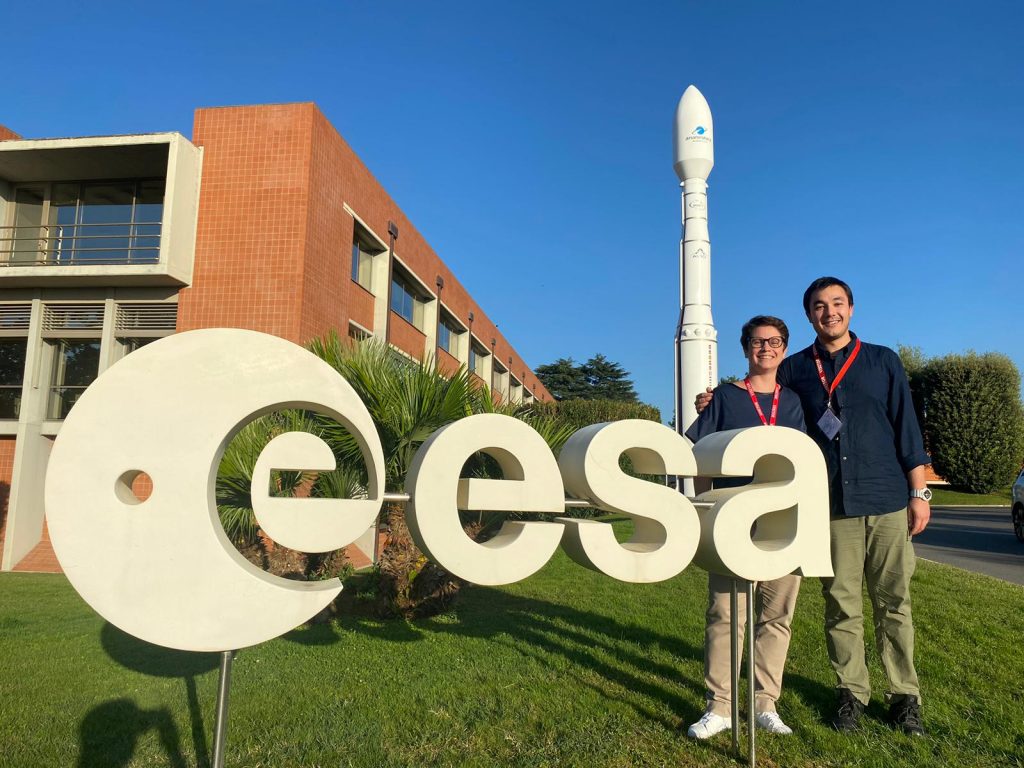
Our researcher Ilaria and our Ph.D. student Marco participated in the final review meeting of the Quantum Computing for Earth Observation (QC4EO) project at the European Space Agency ESRIN headquarters in Frascati (Rome). The main goal of this study is to explore Quantum Computing potential advantages for Earth Observation applications. Our team collaborated with various project partners throughout, and during the final phase at ESRIN, they actively contributed to the concluding discussions and prospects.
Un gruppo di ricerca afferente al Dipartimento di Fisica e Astronomia dell’Università di Padova (Dott. Alberto Ambrosetti, Prof. Pier Luigi Silvestrelli e Prof. Luca Salasnich), ha rivelato un fenomeno quantistico inatteso, in grado di consentire flusso di gas senza attrito attraverso sottilissimi nanotubi di carbonio Il lavoro è stato pubblicato sulla prestigiosa rivista Physical Review Letters. Così spiega il Prof. Salasnich: “L’esperienza diretta alle scale di grandezza umane dimostra inequivocabilmente che quando un fluido scorre attraverso un tubo, esso subisce una resistenza al moto, associabile alla forza di attrito. La resistenza diviene tanto più grande quanto più il diametro del tubo è stretto. Tuttavia, laddove le scale dimensionali vengano ridotte fino al nanometro (la miliardesima parte di un metro), la meccanica quantistica può assumere un ruolo chiave, e ciò può determinare fenomeni sorprendenti. Oggi, le tecniche più moderne consentono la fabbricazione su larga scala di tubi di carbonio sottilissimi, con diametri che possono agevolmente avvicinarsi al nanometro. Questi “nanotubi” di carbonio possono essere immaginati come un foglio di grafene arrotolato in forma cilindrica.” “Il nostro gruppo” -prosegue il Dott. Ambrosetti- “ha studiato in dettaglio il flusso di atomi di elio attraverso un nanotubo, rivelando sorprendenti analogie con la superfluidità – un meccanismo caratterizzato dal fisico sovietico Lev Landau negli anni 50′. Il meccanismo della superfluidità consente passaggio senza attrito di particelle attraverso un fluido ultrafreddo (detto superfluido). Noi abbiamo dimostrato che il nanotubo, pur essendo solido e non necessariamente ultrafreddo, può comportarsi a lato pratico come un mezzo superfluido: quando l’elio ha una velocità inferiore ad una soglia critica, gli urti contro il nanotubo vengono soppressi quantisticamente. Per l’assenza di urti l’elio non percepisce la corrugazione delle pareti del nanotubo ed è quindi libero di scorrere senza attrito. Si verifica in sintesi un superflusso.” “Tale superflusso” -conclude il Prof. Silvestrelli– “è consentito fino a temperatura ambiente, e risulta verosimilmente trasferibile ad altri fluidi, come ad esempio l’acqua. Il superflusso all’interno di nanotubi potrebbe completamente rivoluzionare fenomeni di trasporto e di attrito alla nanoscala, e consentirebbe la realizzazione di sistemi filtranti ad alta efficienza energetica – utili a contrastare la crescente carenza di acqua pulita in paesi in via di sviluppo.”